
Ever have a loose output jack on your guitar or bass? Ever tried to tighten it and been frustrated as it spun round and round inside the guitar?
Then, oh boy, are you going to like this. Check it out jack-spinners. 😉
Read More
Ever have a loose output jack on your guitar or bass? Ever tried to tighten it and been frustrated as it spun round and round inside the guitar?
Then, oh boy, are you going to like this. Check it out jack-spinners. 😉
Read MoreWhile most guitars have a single radius along the length of the fingerboard, a compound radius instrument has a radius that gradually increases/flattens as you go further up the neck.
Some players find these a godsend but they do require some different methods to set them up and to perform fretwork on them.
Read MoreThat’s what players usually want.
I want it really low, but no buzzing. As low as possible without buzzing.
But, it's just not that simple…
Read MoreGetting the top of an acoustic instrument moving is vital to getting the best tone from it. You have to make sure you're transferring as much of the strings' energy as possible and a too low a saddle can mess that up and really kill your tone.
Find out more…
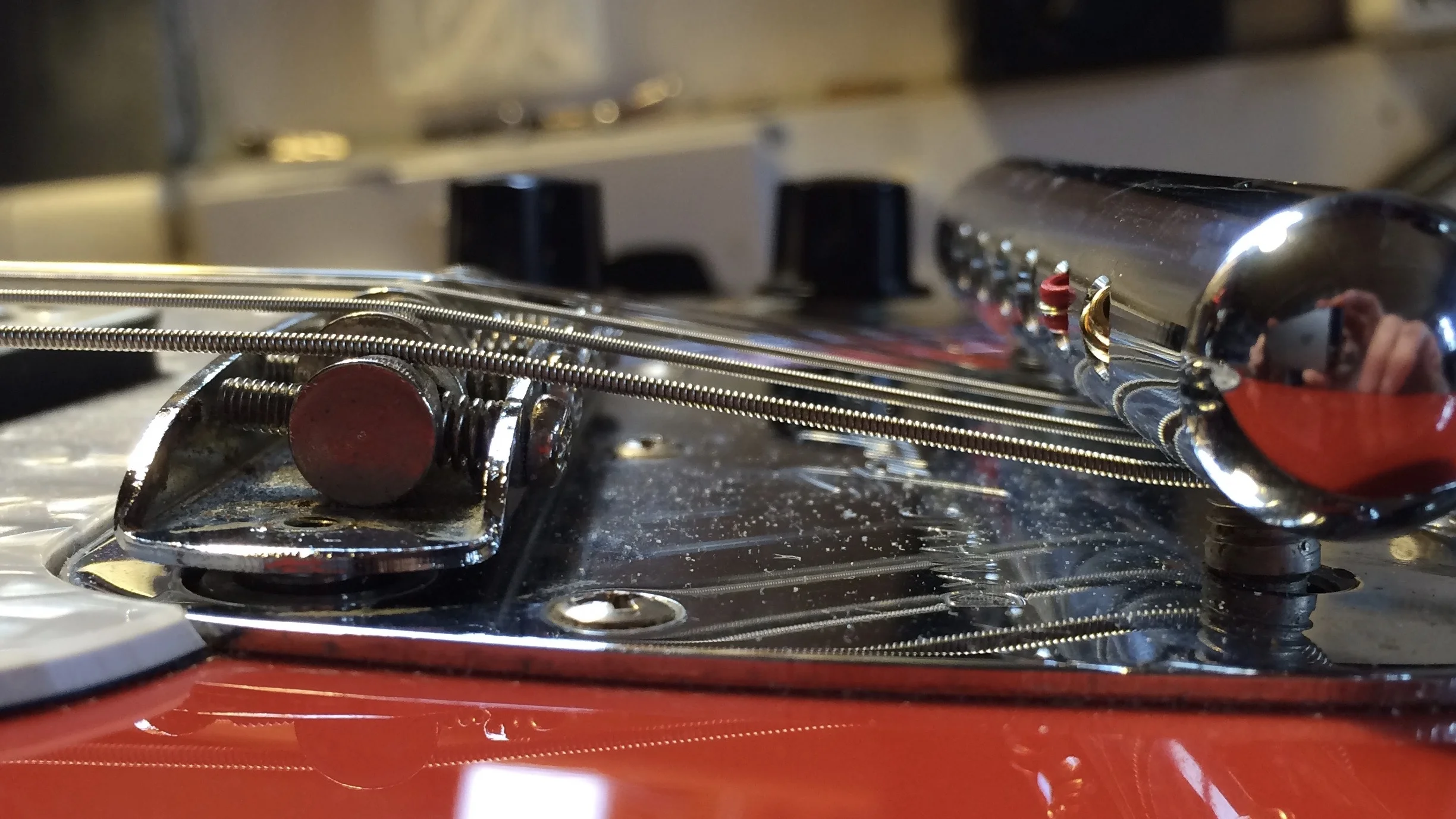
Read MoreWhat we generally refer to as the ‘offset’ Fenders (Jazzmaster, Jaguar, Mustang, Jag-Stang) can sometimes be a quirky bunch and one of their more common annoyances is the bridge.
Often, notes can suffer from a lack of focus and sustain. Strings can ‘jump’ from their slots if played even a little too hard, and the bridge itself can be buzzy and rattly. Sometimes you’ll even have saddle height screws vibrating loose and rattling, or even falling out.
Read MoreFor the last while I’ve been rambling on about string angle over the nut. Now, I’m going right down the other end. Let's talk about how the angle your strings break over your bridge saddles can impact your Gibson (or Gibson-style) guitar.
Specifically, let's talk about collapsed bridges…
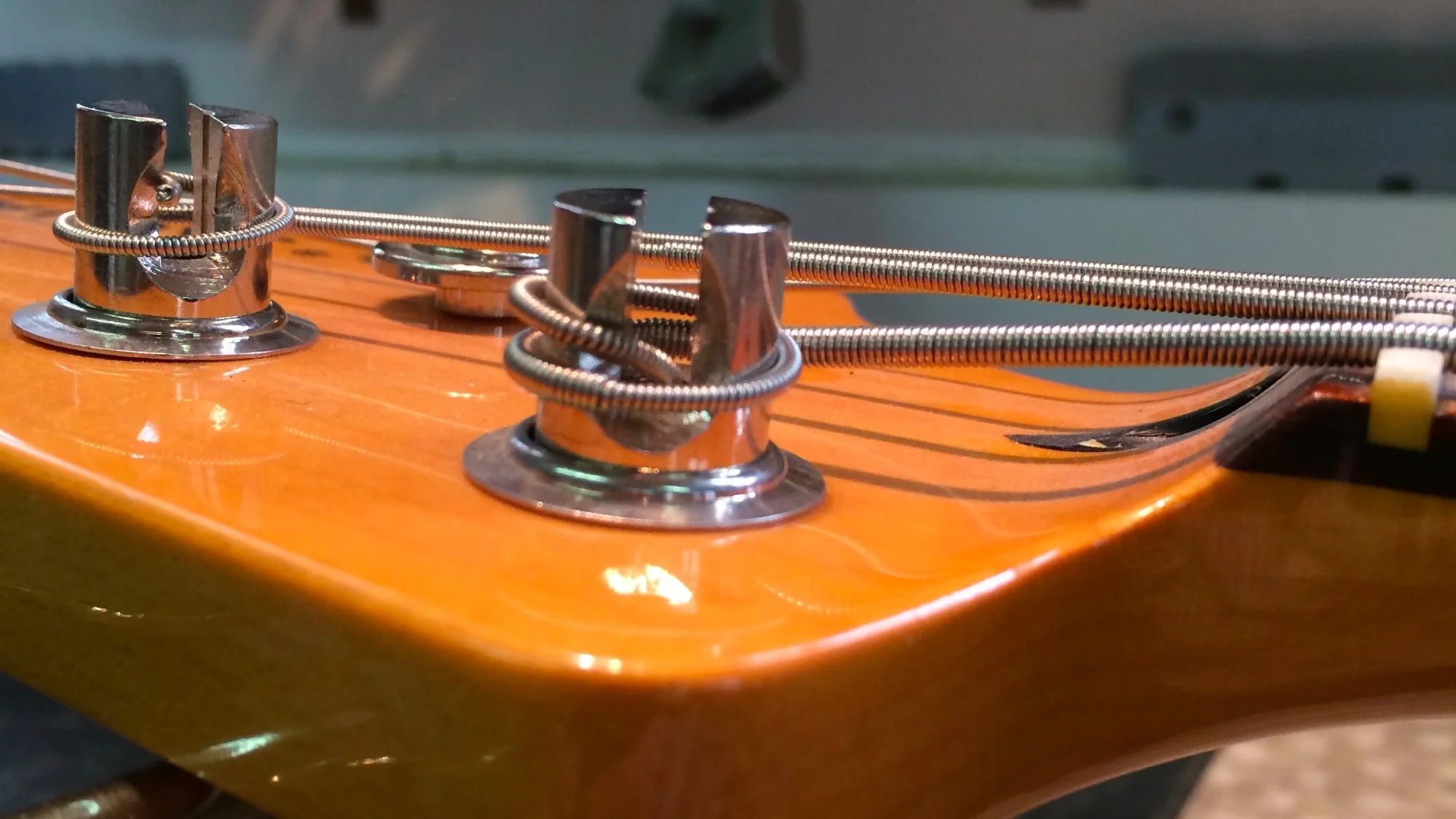
Read MoreYou know the string retainer bar? Also known as the ‘dammit-I-forgot-to-put-the-string-under-it bar’.
It’s that little thing on the headstock, between your nut and tuners. The strings install under it.
You’ll find them most often on guitars with locking tremolo systems like Floyd Rose and Ibanez Edge bridges, and, on these instruments, it's important that it's properly adjusted.
String break angle can cause problems if it's not correct. Too shallow an angle, in particular, can be a source of buzzes, rattles, and general tone-sucking.
Get the skinny on sting angles and avoid sucked tone.
Read MoreSo, I want to talk about a few tips related to string ‘break angle’ — the angle the string takes over the nut or saddle. However, I reckon that it might be useful to explain what I mean and to give a little background on this area first.
Let's start with the break angle at the nut — that's the angle at which the string leaves the nut and heads for the tuner.
Read MoreI've run through a lot of frequently-asked setup questions over the last few weeks. I figured it might be useful to round them up and present them as a list so they're a bit easier to find.
Read MoreIf you play in dropped tunings or you detune your guitar, you'll probably want to give some thought to the instrument's setup. Do you set up for the dropped or standard tuning? What sort of setup adjustments should you worry about. What's the low-down?
Get it? Low-down. Ha. Click through for more info and fewer jokes.
Read MoreDifferent guides and instructions call for measuring string height/action at different places along the neck. The most common you'll hear is probably at the 12th fret, closely followed by direction to measure at the 17th fret.
So what's the best way to do it?
Read More