
The Spot-Levelling Problem
Last time we talked about the possibilities for spot-levelling a single high fret so that it was brought down to the height of its neighbours and ceased to be a cause of buzzing or choking notes. And it’s great when that happens. It can be a quick and easy fix.
But it’s not without its pitfalls. The think is, it’s not always easy, or even possible, to work on one fret in isolation without causing knock-on problems. And, sometimes, it’s even difficult to properly identifying a high fret.
Let’s deal with the identification issue. Fret rockers are easy to pick up these days. You can get one from the usual luthier-tools suspects but you can easily find some on eBay or Amazon too. Armed with a fret rocker, you naturally start rocking your frets looking for a candidate for High Fret. You find one. Hurrah. Now to file it down.
But hold on there. Things are not always so straightforward as they might seem. Let’s look at a fret rocker on a high fret. Check out the amazing moving image below (by 'amazing' I mean 'terrible low resolution gif')…
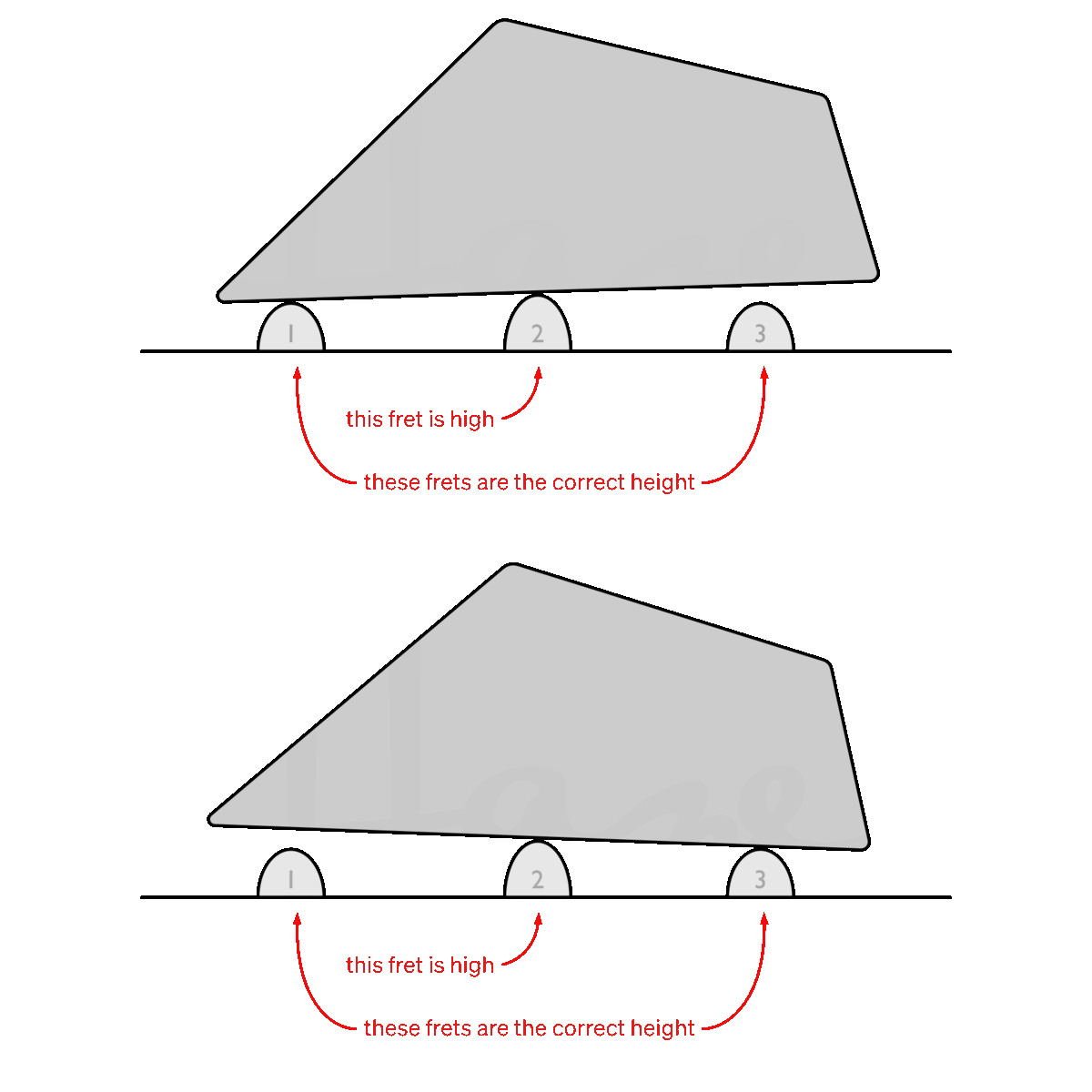
Fret rocker rocking on high fret
Because the Fret 2 pokes up above the two—properly sized frets— either side, the fret rocker rocks on it. Great. High Fret Identified! Number 2 is the problem.
However, what if it’s not a high fret?
Here you can see that the fret rocker will rock in a similar way if there’s a low fret off-centre. Fret 3 is low but that causes the rocker to tip back and forth as if fret 2 is high. You really need to be careful with this.
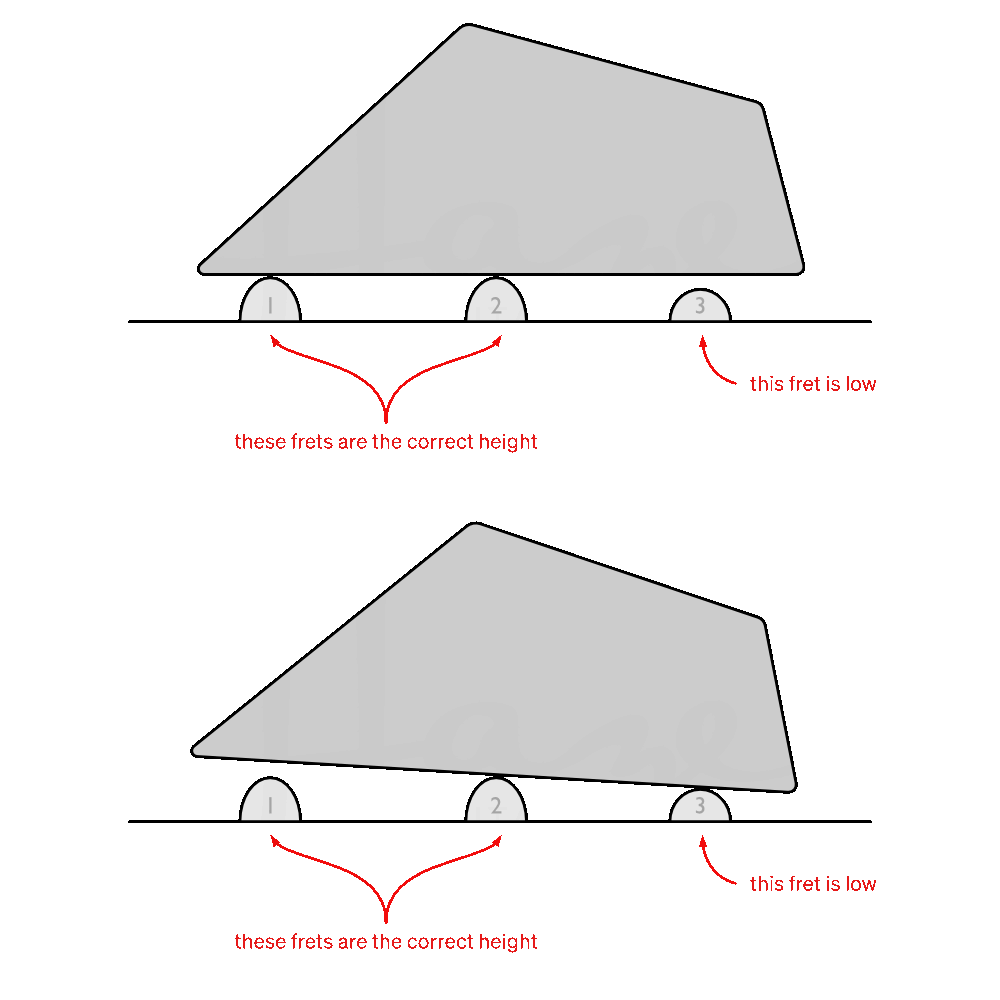
In this example, you might be able to continue along to the next set of three frets and maybe identify that fret 3 was low by rocking over frets 3, 4, and 5. Then, those two different data points might indicate that fret 3 was low. Of course, you do need to be certain that fret pair 4-and-5 is correct in order to make that call. Oh, and you need to be sure that pair 1-and-2 are also correct.
And, there’s the rub. In order to feel safe levelling a single fret in isolation, we must be certain that the frets around it are correct. If not, we can just end up chasing our own ass along the fretboard. We might level a suspected high fret and find we now have two accidentally low frets, for instance (and it's not typically realistic to correct for low frets by spot-levelling).
It's not uncommon to have a number of uneven frets in different locations along the neck. This obviously makes it much more difficult to deal with individual frets in isolation. If those uneven frets are distant from each other with a series of level frets between, that's ok—it' s probably fine to deal with each on its own (subject to the identification issues mentioned already). As uneven frets are grouped more closely together, additional complexity sneaks in and things can get more complicated than you might have imagined when you first bought that fret rocker.
Spot-levelling a high fret is great. It's saved me a lot of work on more than one occasion. But it's not always possible or appropriate. Depending on the type and extent of the fret unevenness, it's frequently better (and even necessary) to just level the whole neck. Doing that, you end up with a nice clean playing field with each fret at the same height as its pals either side. That's often the way to go.
This article written by Gerry Hayes and first published at hazeguitars.com







Gibson’s addition of PCBs gets a lot of criticism. Is it justified? Mostly no but with a little bit of yes.