
The Space Between The Notes
A slight delay in international travel has meant that a band has dropped off a heap of guitars at the end of the day instead of the start of the day and has left me a little pressed for time. That happens and it's all good but it means that this email isn't the regular email. This email is an interstitial email. It exists between two other 'regular' emails because I don't have the time to put into a it.
However, because I'm all about the fundamental interconnectedness of all things, I'm tying this email's weird in-between existence into its content. Meta, or what?
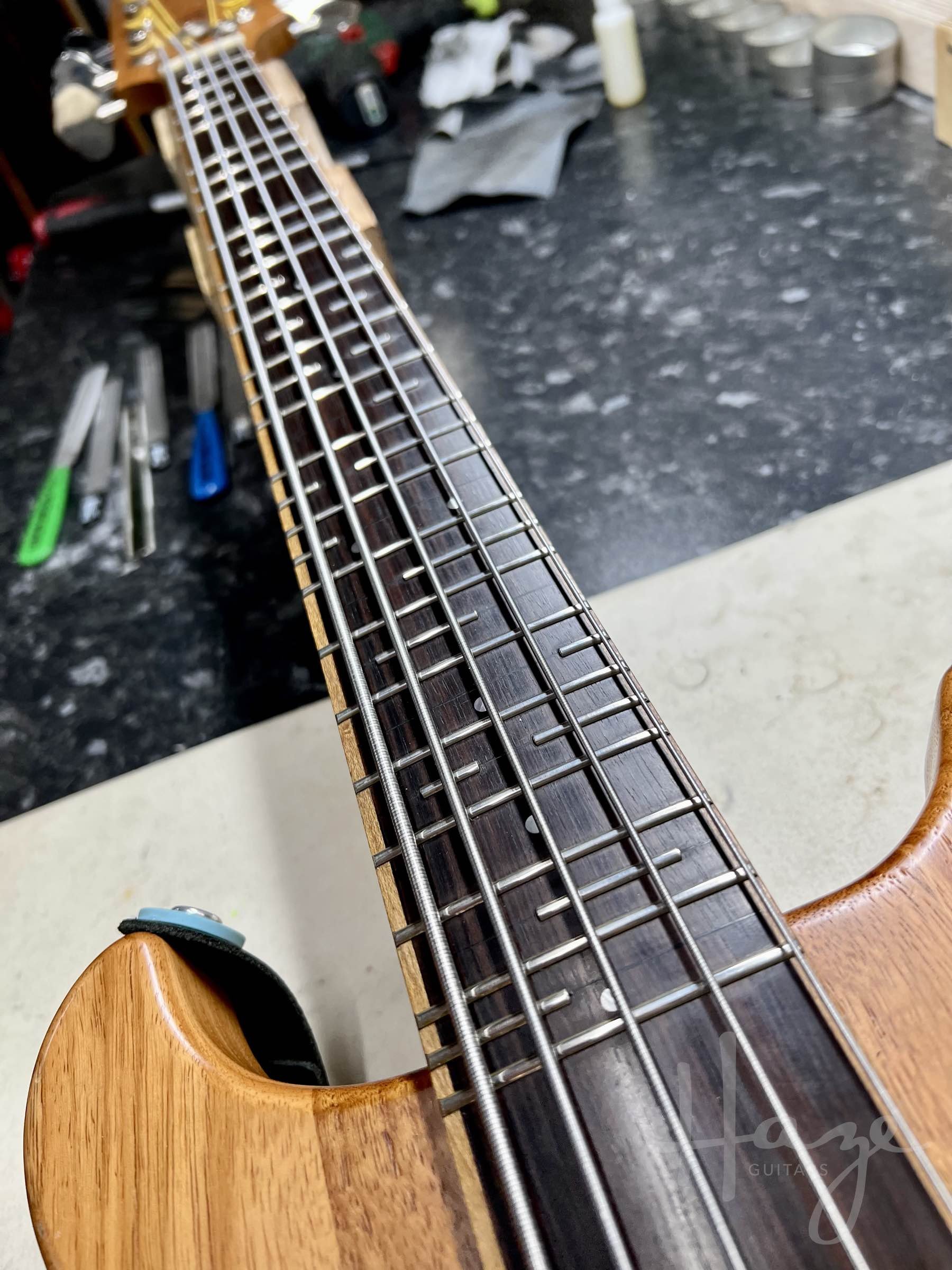
Microtonal 5-string bass
I'm going to touch briefly on microtonal instruments.
Many of us grew up hearing music that's primarily based on the 'western' system of dividing an octave up into twelve equal parts. We call each of these parts a semitone and we make our instruments and our music within those guard rails.
Of course, many parts of the world decided long ago that an octave could be divided up quite differently and so, in what we condescendingly call 'world music', we can find instruments and music that use very different subdivisions of the musical octave. For someone who's used to hearing only one of these styles, another can sound pretty strange. That's familiarity for ya.
In recent years (well, I've only become aware of it relatively recently) microtonal instruments have sneaked into western-styles of rock music. It's not exactly widespread but it's not hard to find if you go looking.
The consequence of that is that you might see these crazy microtonal instruments now and then.
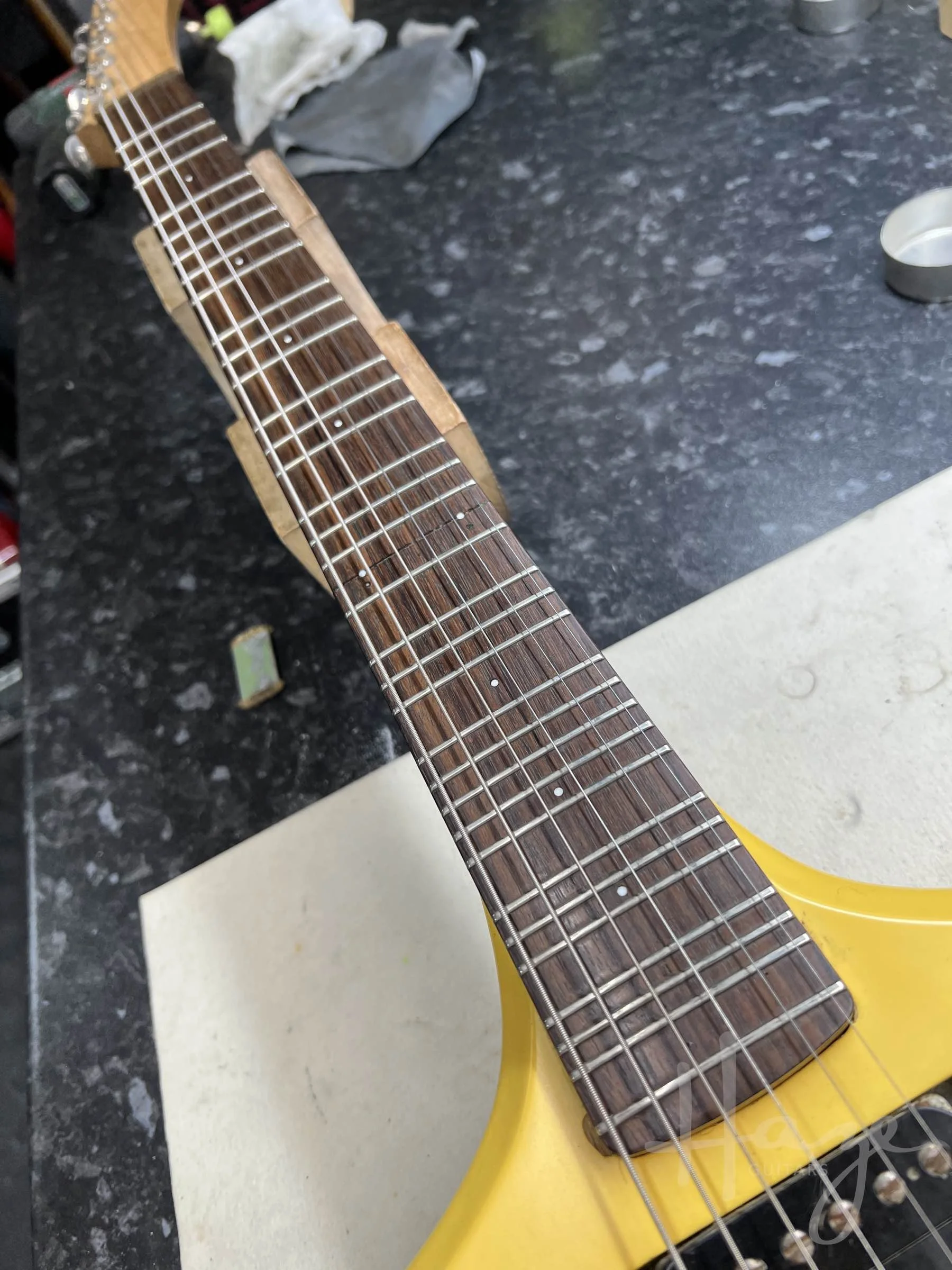
Microtonal guitar
What does that mean for the guitar setter-upper? Well, usually, it's not too bad. Most of the microtonal guitars and basses I'm aware of have a foot in both camps. If you look closely enough, you'll find the traditional 12 fret positions. Each of these semitones might be further divided into one or more microtone intervals but you'll usually find the 'regular style' fret positions.
That being the case, you can typically use these for much of your setup work. Find the octave, 12th fret for setting intonation; set action at the 17th fret and so on. You can even use the 'standard' 1st fret for checking nut slot clearances although you should then double check the clearance is ok on any further nut-to-first-fret microtonal frets if they exist.
So, setup isn't really too tricky. I assume there may guitars and basses that eschew the standard fret positions in pursuit of microtonal madness but I guess I'll have to cross that bridge when I come to it.
Oh, and of course, if it's time for a refret, the rates might go up. 😄
So, go seek out some microtonal rock on YouTube. You may dig it immediately or you many be a little frightened by it. I was in the latter camp but kept reminding myself that all the squares hearing Black Sabbath play in 1970 probably felt a bit frightened too. 😄
This article written by Gerry Hayes and first published at hazeguitars.com


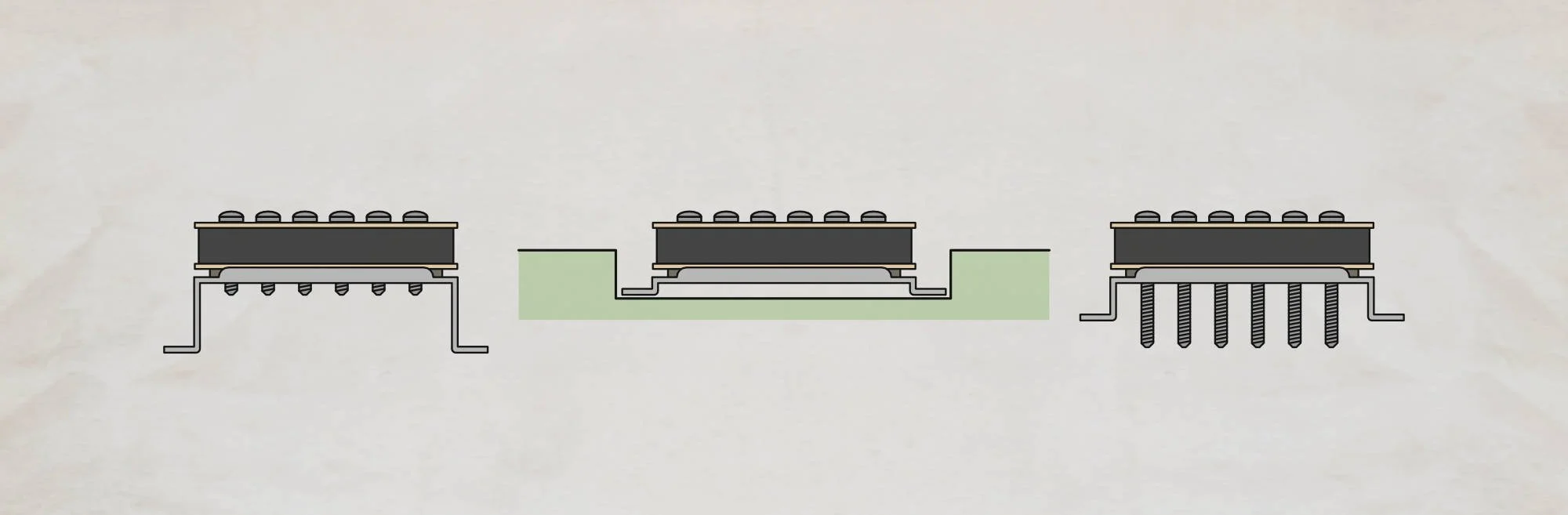


Gibson’s addition of PCBs gets a lot of criticism. Is it justified? Mostly no but with a little bit of yes.