
Travel guitar demonstrates neck resets
Neck resets can be tricky to explain in the abstract, but a travel guitar that came in for a setup this week provides a really clear illustration of what's actually happening — and why it needs to happen. Worth a look even if you've covered this ground before.
I’m taking a little step into the past this week and discussing something we’ve talked about before. However, an instrument that I was asked to set up has provided me with a really nice illustration on the subject of neck resets and I thought it’d be good to revisit why it’s often necessary to perform a neck reset on a guitar.
A customer left their Journey Overhead travel guitar with me. In order to make something easy and (relatively) more safe to travel with, the folks at Journey designed the guitar with a removable neck. They’ve come up with a quite clever attachment system and it seems to work quite well and hold quite securely.
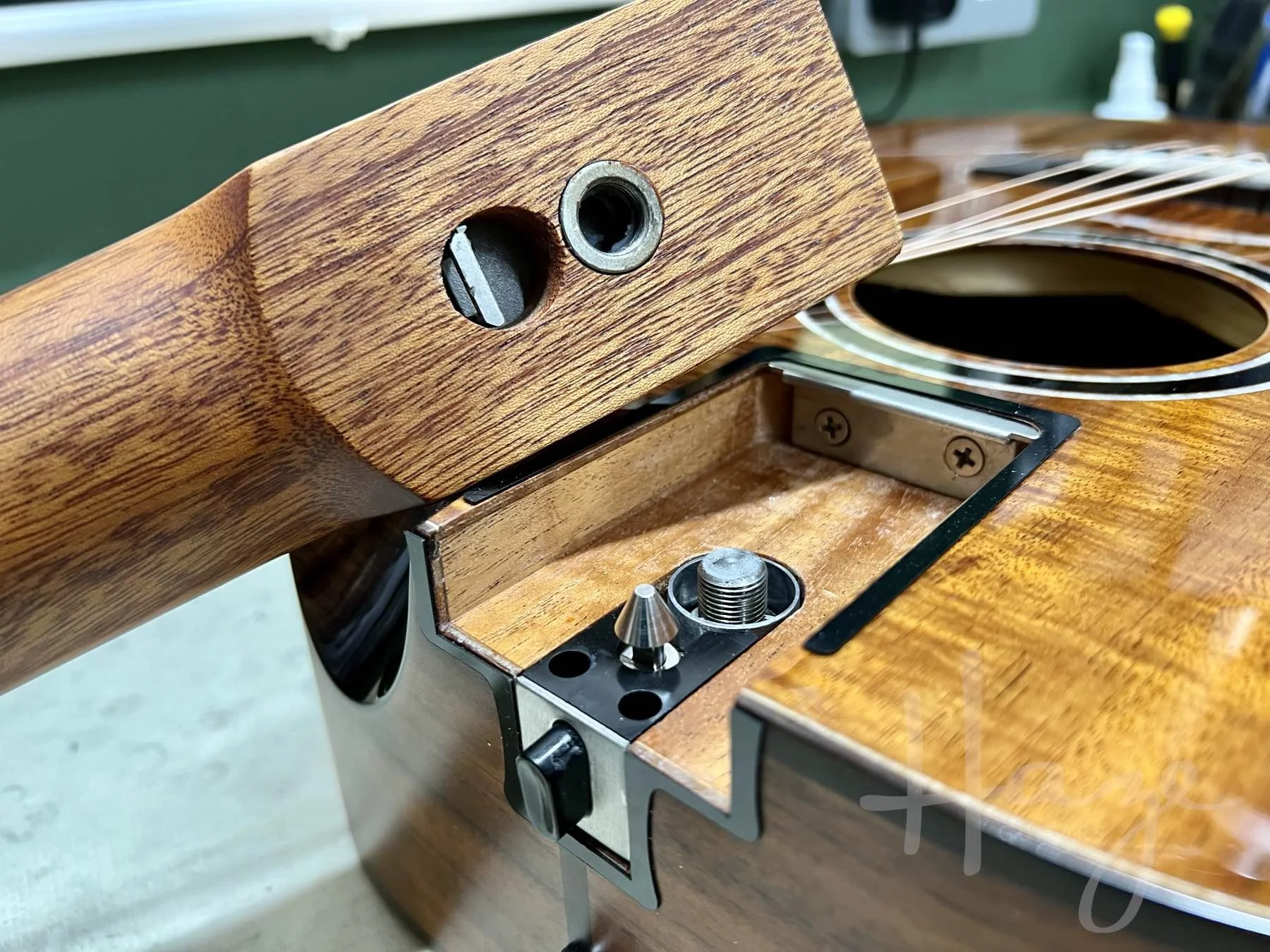
There’s a little spring-loaded notched bar that handles the initial ‘grabbing’ when you attach the neck and then there’s a hefty bolt that secures everything down. Great.
My customer asked me to set up the guitar as he felt the action was too high. And it was. At the 12th fret the top and bottom strings both read around 12/64” (almost 5mm). Yeah, high. First thing I noticed was the neck angle…
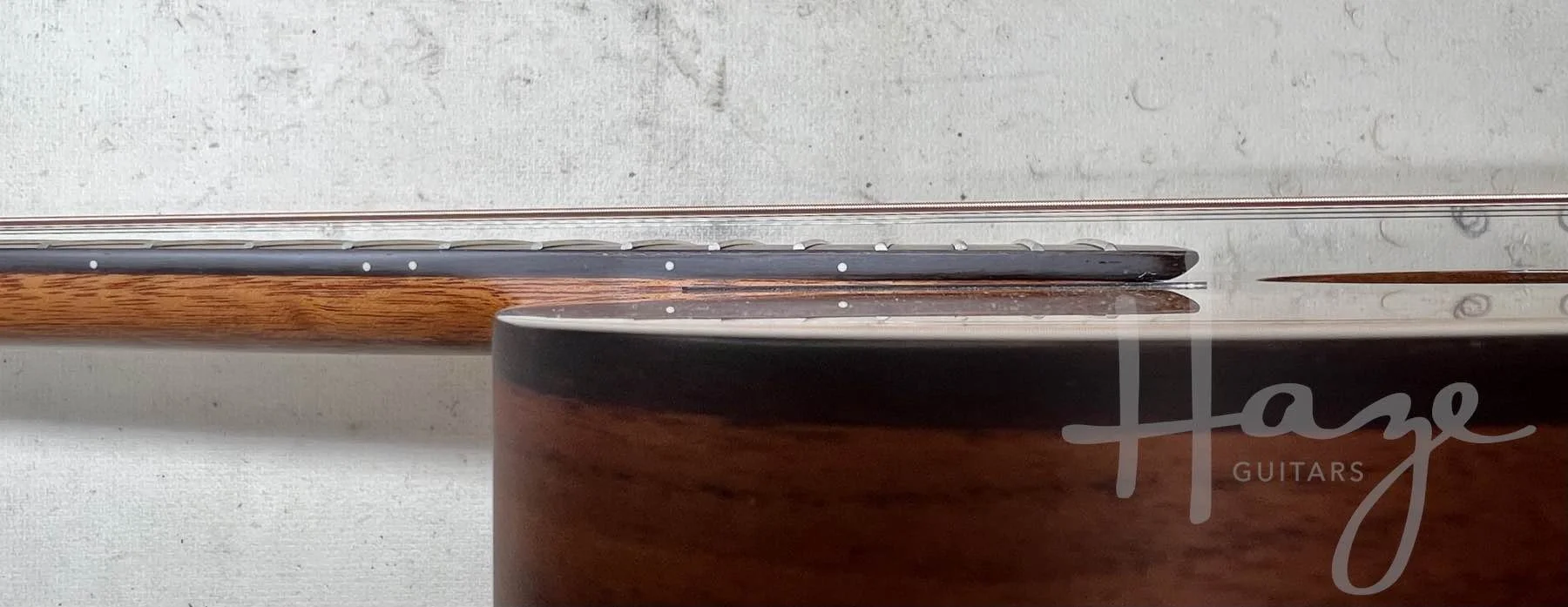
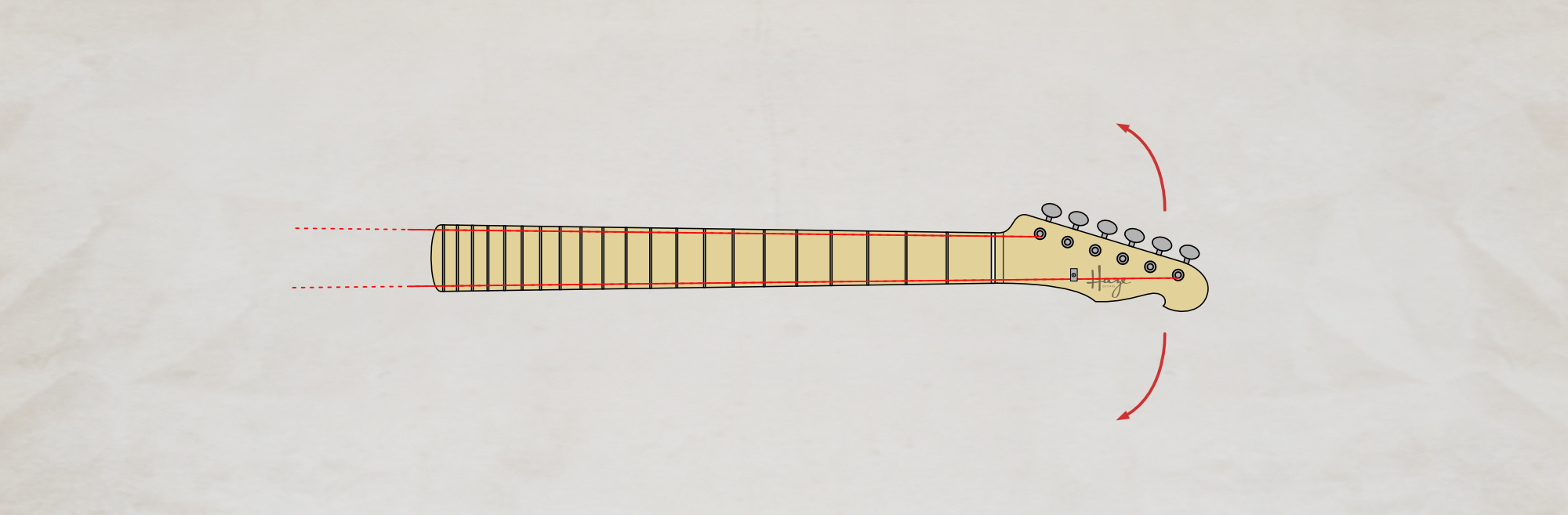
You can see how the fingerboard angles towards the body as you move up the neck. That means the nut-end of the neck is pulled up and all this is contributing to the very high action (which you can also see).
This is obvious on this instrument because the neck and body are purposely separated. You can see the fingerboard dive towards the body near the end of the neck. On a regular steel-string acoustic, though, pretty much the exact same thing can happen. However, when the fingerboard is glued to the guitar top, you can’t actually see it in the same way. The neck angle change isn’t so obvious as it is here.
Here, it’s obvious and I thought it’d make a decent explainer.
The reason this happens on a regular acoustic guitar are that years of string tension can pull the guitar around and mess with its geometry. As it turns out, the reasons in this particular guitar’s case are very different, but the concept is exactly the same. And in either case, it’s neck reset time.
Resetting a regular guitar can be involved but resetting this should be a bit more straightforward. Journey guitars actually have an article on their site about a pack of shims they can provide to place between the neck and body in order to angle back the neck and improve action (I can’t see for sure if these are Gerry-Approved™ wedge-shaped shims but I think they might be and one at least is full-pocket). A neck reset might be as easy as adding some shims on this one.
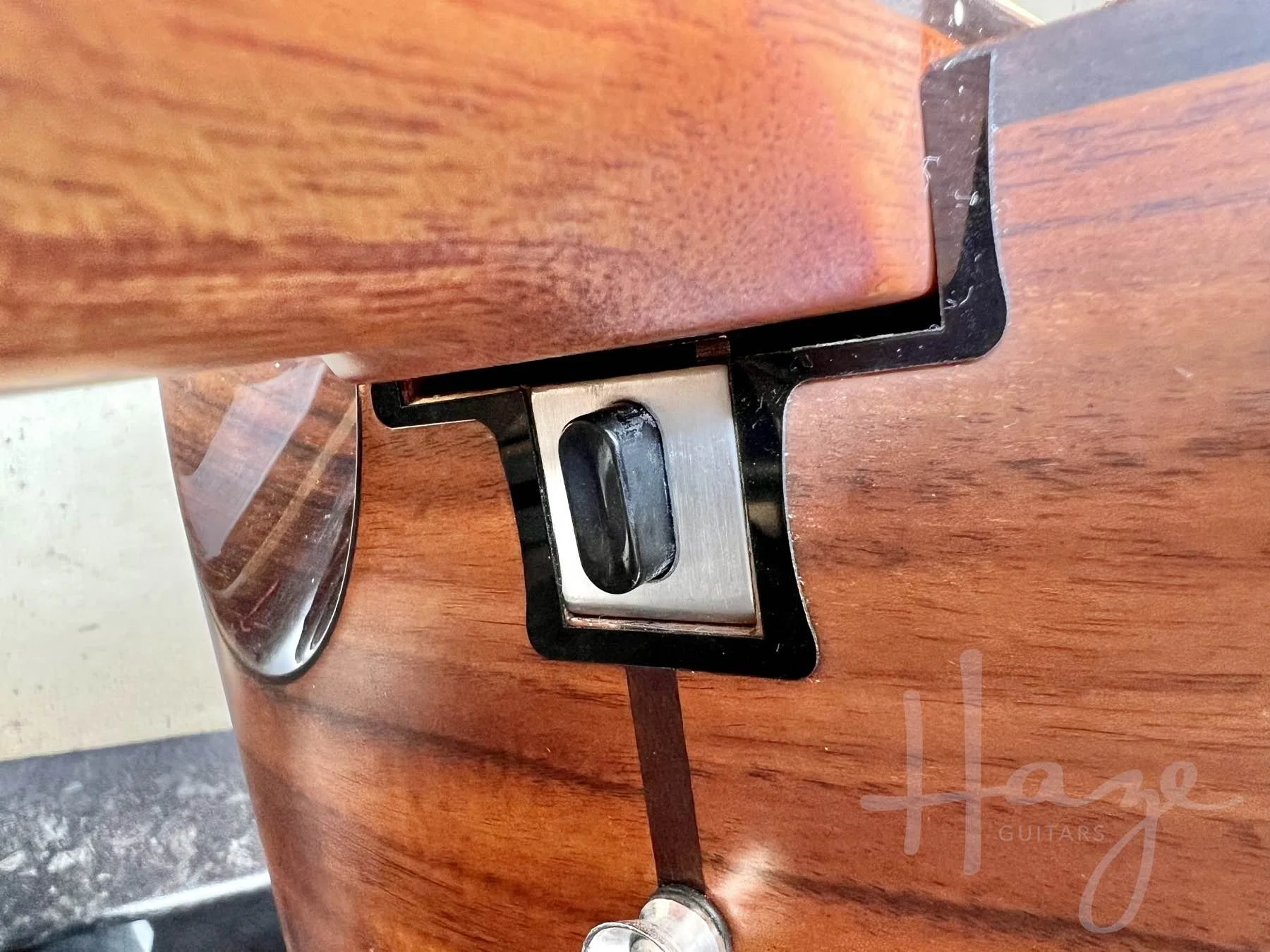
Or it might be even easier. In the photo above, you can see there’s a gap between the neck heel and the pocket. As it happens, there’s a bit of a trick to attaching this neck when the strings have some tension on them. The strings want to pull it up (into the angle we saw). The bolt around the back should be able to pull it down but that’s a big ask for one hand-tightened screw. The guitar needs a little encouragement to push the headstock end of the neck back so that the screw can fully tighten and pull the heel flush against the neck pocket.
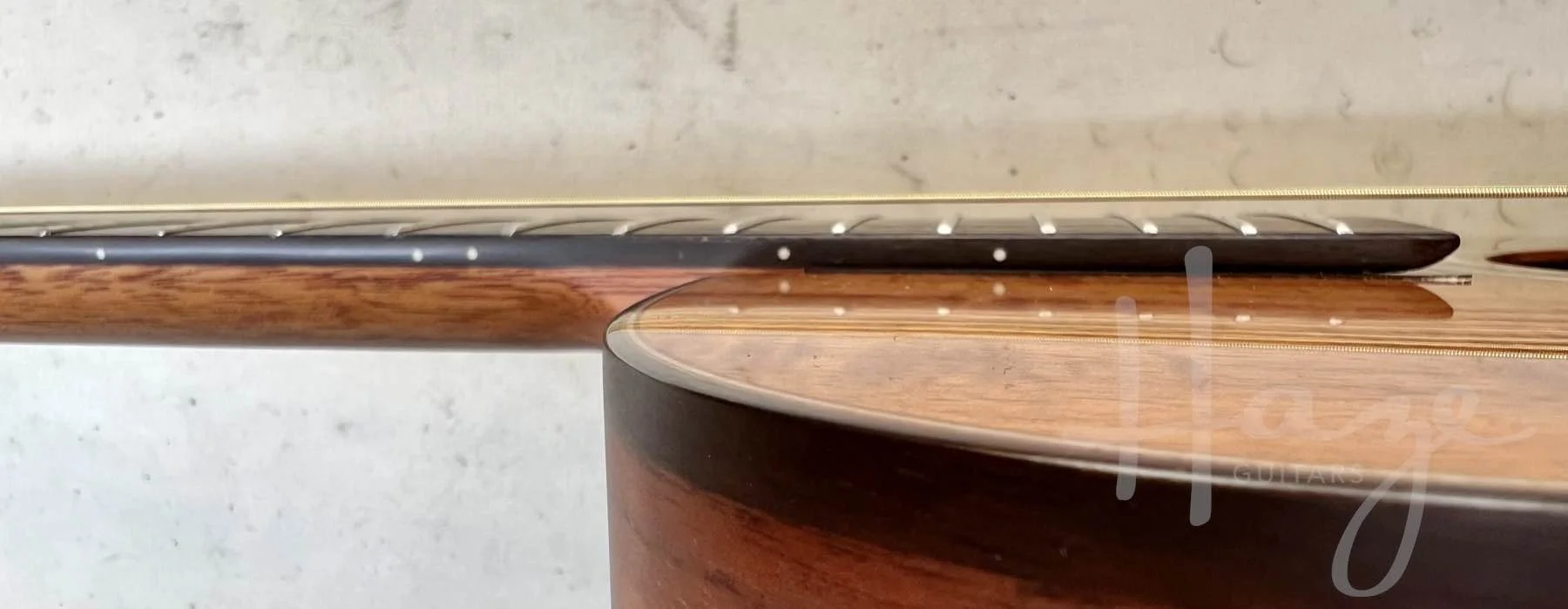
And then, we get a nice neck angle with a much more respectable action. So, no shimming necessary and we performed a neck reset by holding the neck back while tightening a screw. Great. If only all neck resets were that easy.
This article written by Gerry Hayes and first published at hazeguitars.com







Gibson’s addition of PCBs gets a lot of criticism. Is it justified? Mostly no but with a little bit of yes.