
The Mystery B-String Noise
Human brains are amazing things. Humans have sent other humans to the moon. Humans are probing and understanding things at the farthest reaches of the universe and the deepest depths of the atom. Humans figured out that we can mix some stuff together, heat it for a while and, hey presto: Cake!
I think about this stuff often and I marvel at the achievements of our species. Seriously, it's breath-taking to think of the incredible stuff we weird hairless apes have done. Especially, the cake thing. Hurrah for brains!
But, for all the wonder of our brains, they're not flawless. Sometimes, they can do things to trick us. And, sometimes, that thing happens to be guitar-related and you just know I'm hopping on that bandwagon. Brain-stuff and guitar-stuff? Sign me up.
So here's the story:
Someone brought me a pretty new Martin guitar. He told me there was a bit of a buzz/rattle/zing that occurred on the B-string. We had a chat and I had a listen and, sure enough, there was something going on. It wasn't incredibly intrusive but it was there. I said I'd do what I could and proceeded to assess the guitar.
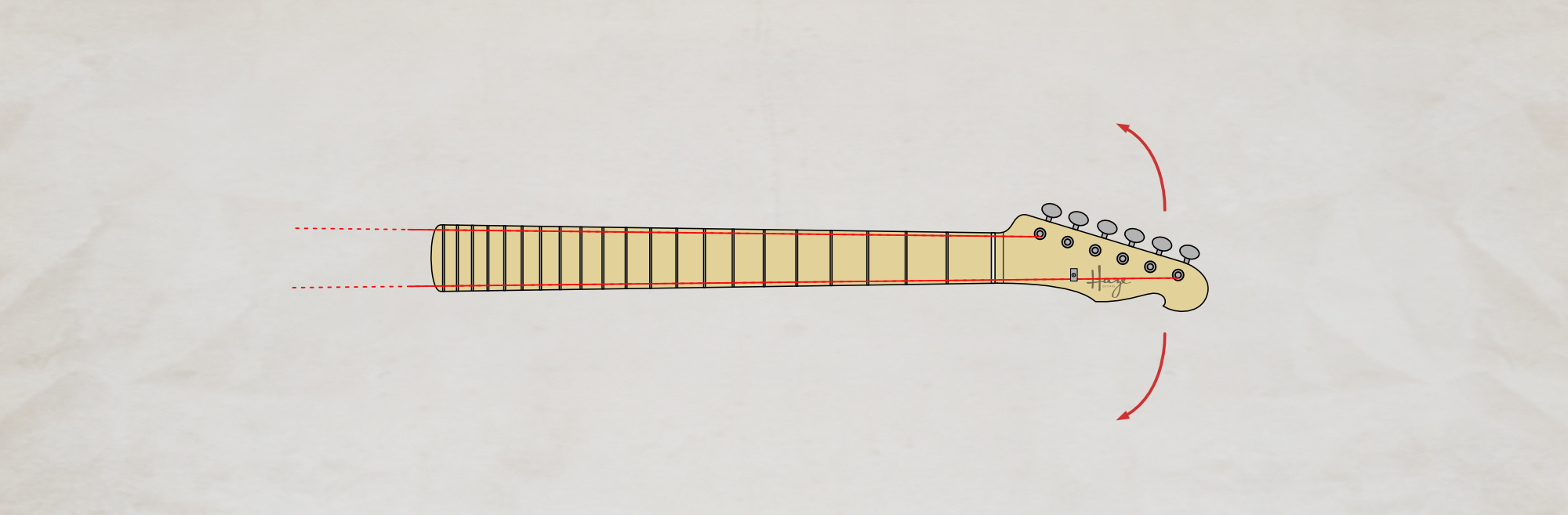
I found that, under string tension, the neck was pulling into a fairly slight hump and there was also the tiniest amount of rising tongue (where the fingerboard extension ramps up towards the strings). Neither of these issues was awful—just enough to be a problem— and they mostly disappeared when I slackened off the strings. We can deal with that, though. I jigged the guitar in the Erlewine neck jig and levelled the frets under simulated string tension. After restringing, I was happy that the problem was sorted.
My customer wasn't. Hmm. He could still hear the noise on the B-string.
All I could hear was B-string. It sounded like I thought it should sound. I was sure there had been a problem but I was pretty sure it was now ok. We talked and listened for a bit and I had an idea. My customer was happy that the first string sounded ok. With that established, we had a reference point—we could both agree that the first string played cleanly so we could be relatively sure its string path was sound and free from any obstructions that might cause a zing. So, I removed that first string and replaced it with a spare B. Now the guitar had two B-strings, side by side.
He heard the same issue on the newly installed B-string too.
I just heard two B-strings.
Ok. So, we're not in a great place but at least this told me that it's probably not frets, saddle, or setup causing the issue. Of course, the fact that I can't actually hear the problem isn't ideal but I didn't want to just dismiss this and wash my hands of things.
Where to go from here? I talked with him about the potential for sympathetic vibrations and said I'd do some additional examination of the instrument. I'd be shooting in the dark because I couldn't hear the same issue but committed to examining things for anything out of the ordinary—with a particular eye on loose braces or hardware.
Nothing. Cleanest damn Martin I've ever seen. 😄
When my customer called to collect the guitar, I was about to admit I hadn't been able to find any problems when he told me something really interesting.
He'd been watching a video review of a similar guitar to his and he said every time they played the instruments' B-string, he heard the same noise he had in his. He checked a few more similar guitar videos with similar results.
It turns out it really was just the sound of a B-string. Not everyone would have fessed up like that and I'm really grateful for his integrity.
The second situation was very similar. I had someone email me asking about an annoying sound/response from the 1st string of an acoustic guitar. He'd been chasing a fix for a number of months with no success. I suggested he try the same trick of adding a second e-string to the guitar to see what happened. He heard the sound on the new string as well. After some more attempts, he was bringing the guitar back to the store when he stopped off at another guitar store along the route. There were a couple of the same models on the wall so he tried them and… same problem on those.
So, what can we learn from these stories? Well, damned if I know to be honest. This stuff is tricky. How and what we perceive is so squirrelly and subjective that it's difficult to generalise.
My feeling is that these are examples of what I'm going to start calling Guitar Psychology. 😄 Maybe I can start a whole new field of study here.
In the first case (the Mystery B-String Noise), what I think happened was that he had been hearing the (very real) noise that was caused by the fret issue. I'd guess that, even after this noise went away, his mind had somehow integrated it with the regular noise of the B-string. From then on, nothing sounded quite right—even completely different guitars played on YouTube. It's a strange one, to be sure. I hope he's able to train his brain to get over this. Otherwise, he'll need to take up the accordion or something (and nobody wants that)*. 😄
The second issue (the e-string one) is maybe a little less cut-and-dry. Perhaps there was a problem inherent to the construction of a particular model guitar. It's possible that the owner in this case had a better ear for these things and was more aware of it.
I think, as guitarists, most of us would probably grudgingly admit that we can sometimes fixate or obsess a little more that we should. The stereotype of the guitarist taking hours to dial in juuuuuust the right sound exists for a reason. It's probably just a tiny step further to not being able to un-hear an annoying zing.
How to avoid this? Erm… You should relax more? Yeah, not great, I know. I wish I had something better. I hope that being aware of this sort of thing will help protect us. It's that or we'll all need to get a Guitar Therapist.
This article written by Gerry Hayes and first published at hazeguitars.com







Gibson’s addition of PCBs gets a lot of criticism. Is it justified? Mostly no but with a little bit of yes.