
Some foam is more equal than others
While duct tape might hold the universe together, foam is what's holding a hell of a lot of our pickups up. While we could easily hang pickups from pickguards and pickup rings (which makes things mostly easy), many pickups are screwed directly to the guitar or bass body (which sometimes makes things less easy). Two or more wood screws to screw into holes in the body and that keeps the pickup in place. The problem is, we don't always want our pickup just screwed right down at the bottom of a routed cavity. Sometimes we want it closer to the strings where it can do its job better.
There are solutions like with the traditional Telecaster neck pickup.
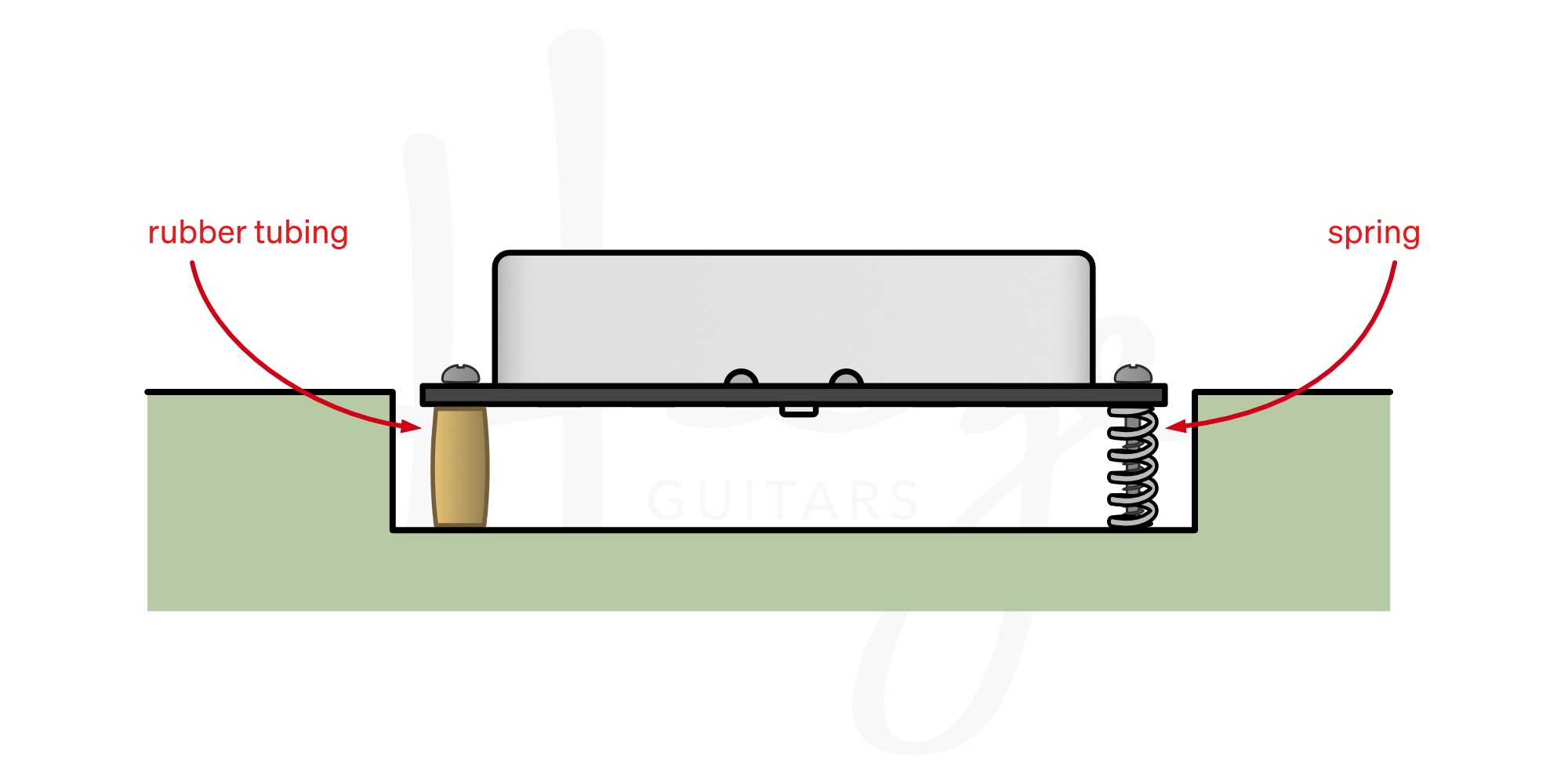
Tele neck pickup mounted with a screw and spring for examples of both alternatives
There's a screw at each end of the pickup baseplate. Between that and the body is a couple of springs or a short length of surgical rubber tubing (that behaves just like a spring). Screw the screw in and the pickup is lowered, back it out and the spring/tubing pushes it up so you can adjust the height. Straightforward and a mostly good solution.
Buuuuut. What about other instruments? You see, not all pickups mount by screwing through their baseplate like this. Some mount by screwing through the pickup cover while the pickup itself is a separate unit.
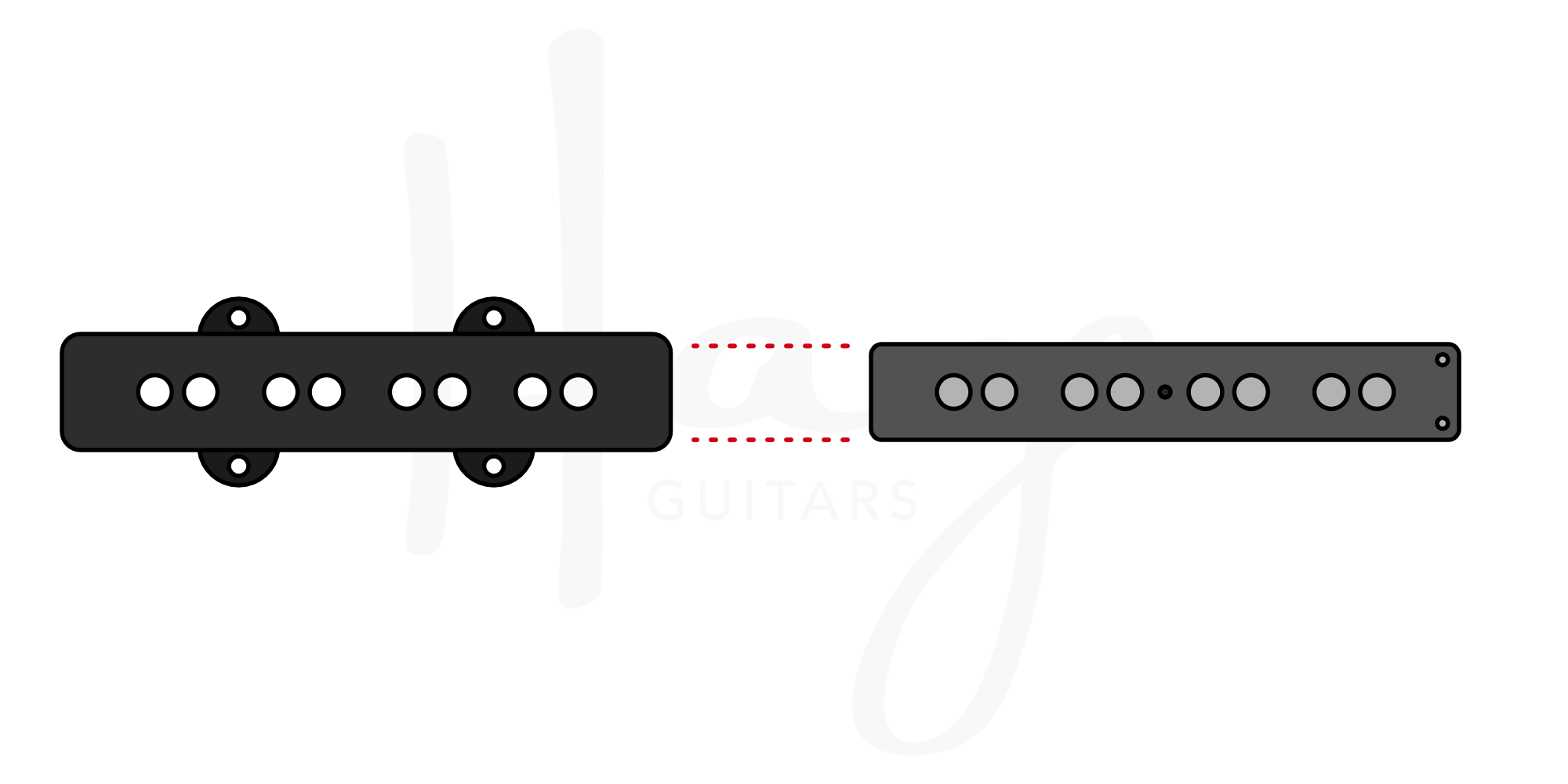
Footprint of jazz bass cover and pickup
There are heaps of these instruments/pickups but let's look at a Jazz Bass. The jazz bass pickup is on the right above. On the left is the pickup cover. The pickup slots into the cover and looks all pretty. Great. However, as you can see the four holes for mounting screws live in those lugs on the sides of the cover.
If you install four springs between these holes and the instrument body you'll be really easily able to adjust you pickup cover up and down to get the right height. Your actual pickup, however, will be sitting at the bottom of the cavity where it's fallen out of the plastic cover. They're two completely separate parts.
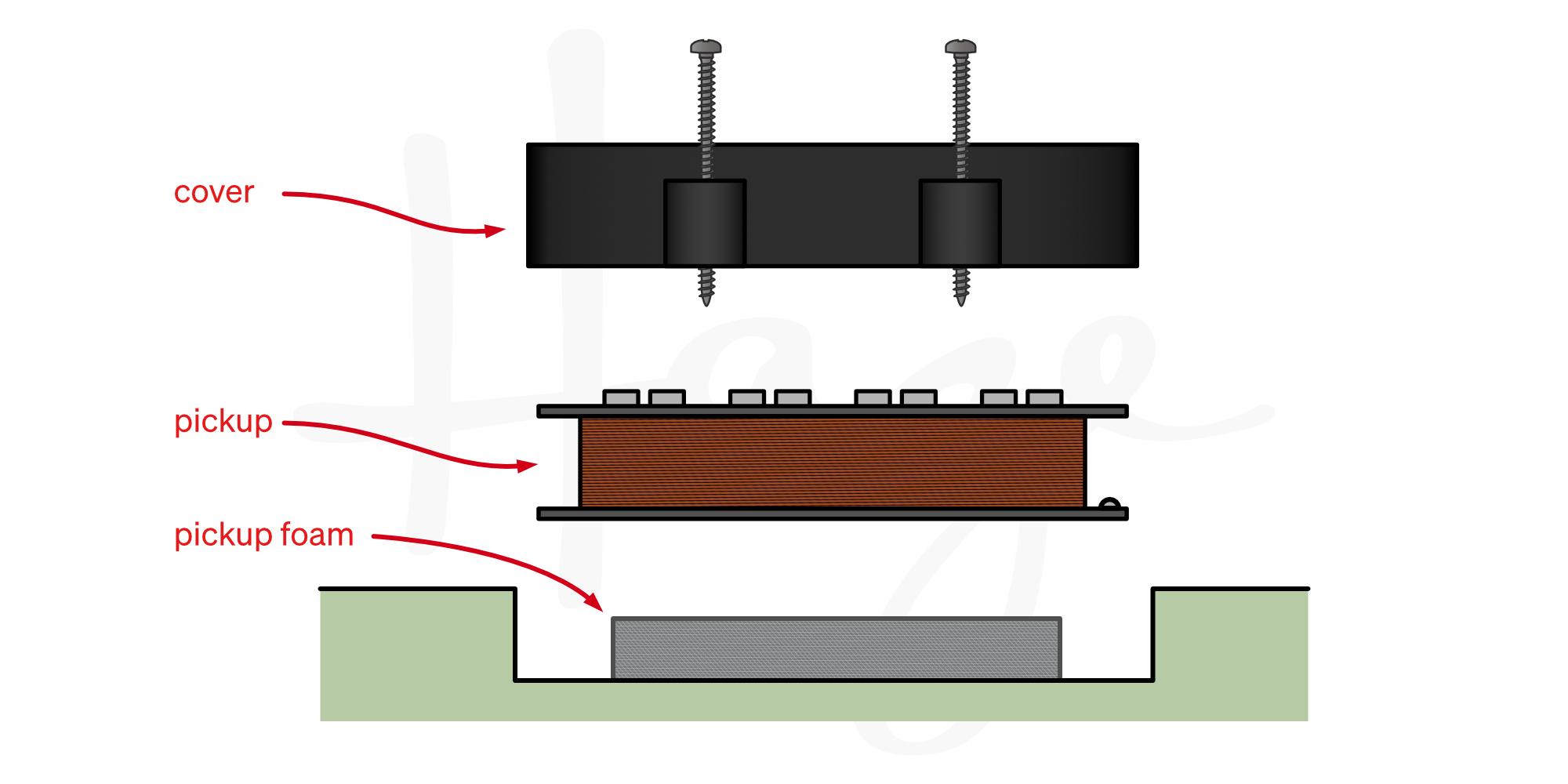
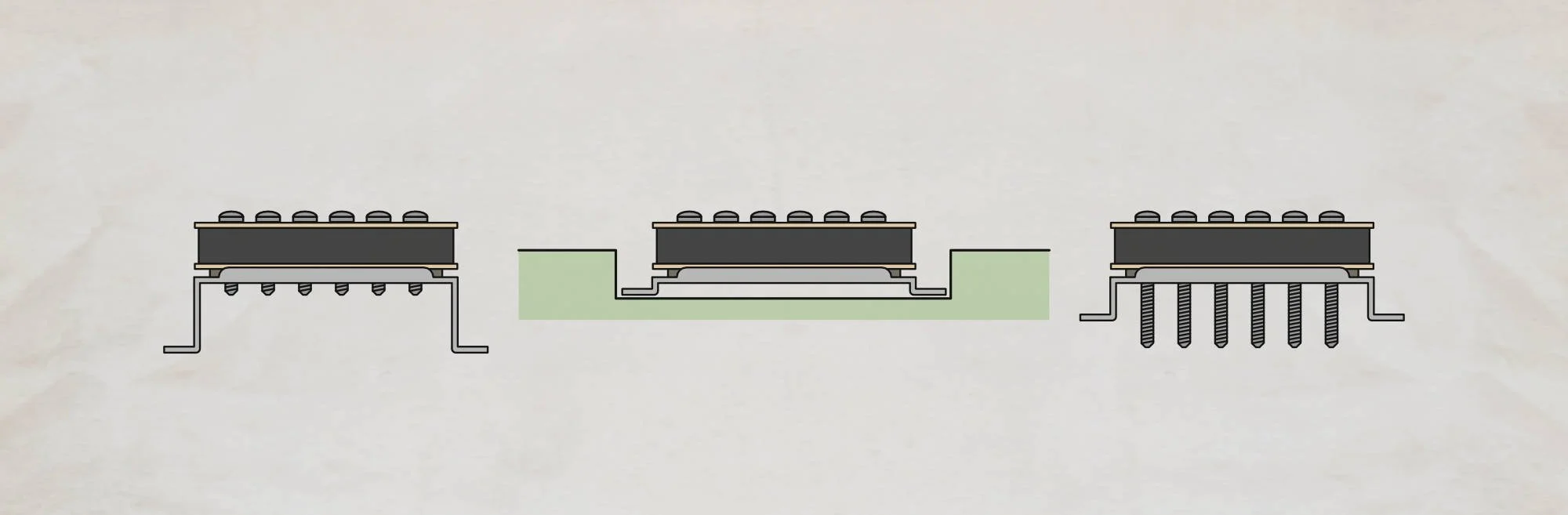
Pickup mounting using foam
The solution is foam. Some relatively dense foam installed underneath the *pickup* (not the cover) will provide that push back up. Then, in theory, we can screw the cover screws down to move the pickup-and-cover down and back out the screws to move the combined unit up.
So far, so good.
But this solution isn't without its problems. The main one you'll come across is that this foam (much like ageing luthiers and blog writers) sometimes gets tired. After a period of time, it's just too much hard work to keep pushing up those pickups. You'll notice it when you try to raise the pickups closer to the strings. The screws back out but the cover and pickup stays put, too far down the cavity for a good setup.
A lot of people, faced with this, just say, "Screw it," and leave the pickups where they were. My readers are made of sterner stuff and are more determined to get a good setup. So, they might be tempted do to what many people do in this case…
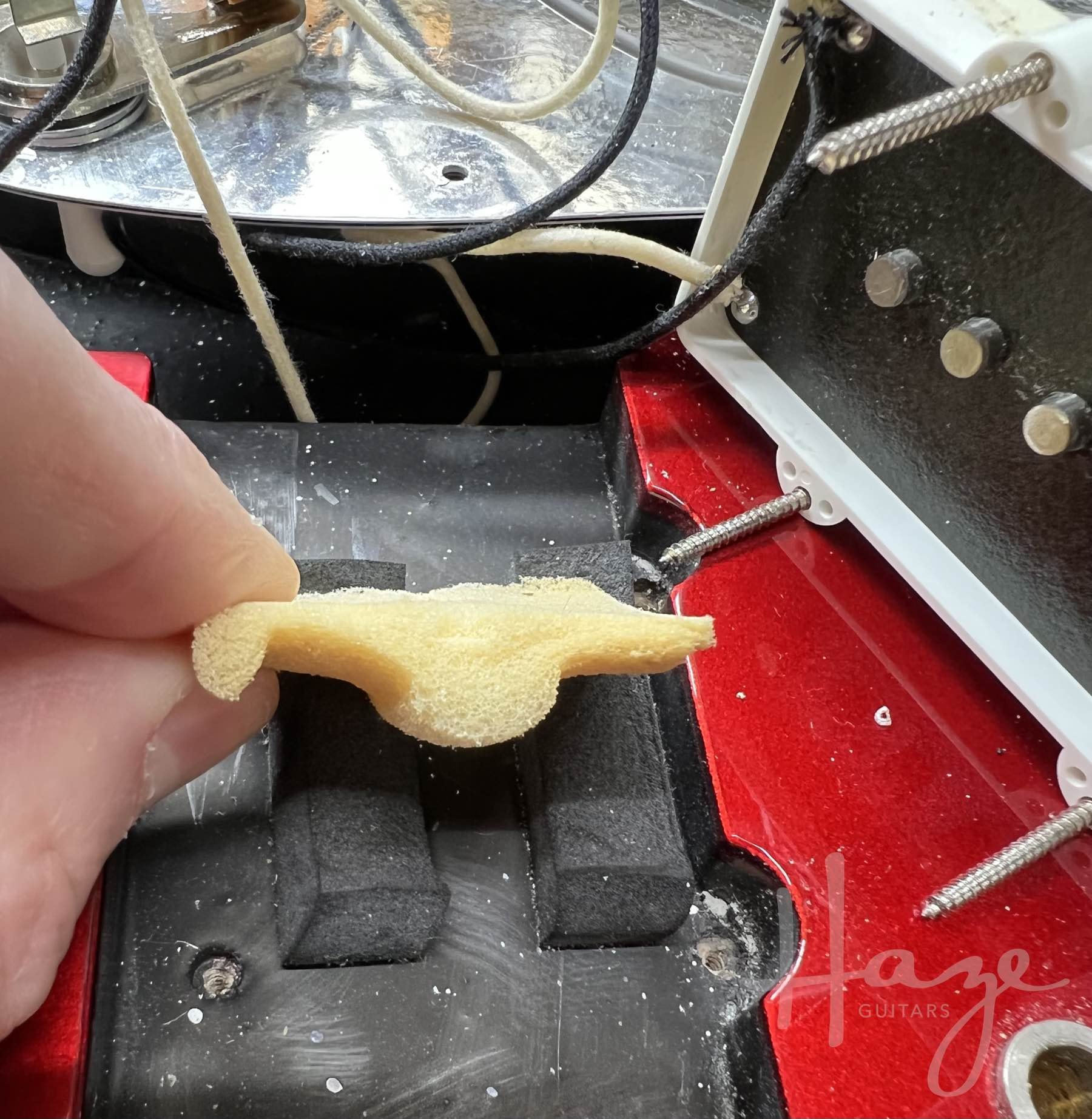
Flimsy foam deformed and squashed under pickup
Gah! No! Most 'everyday' foam is terrible for this job. It's not dense enough to give any useful resistance and it's not resilient enough to last very long. Occasionally, you'll find something relatively posh packaged with some stronger foam but it's mostly safe to disregard any sort of packing foam for this job. Get yourself to the internet and search for something like 'pickup height foam'. It's not terribly expensive and it's better than that flimsy, squishy stuff you find in various packing boxes.
Two other problems that you should consider when you're working with these pickups. First, foam sometimes compresses in odd ways and it's not terribly unusual to have a pickup start to tilt one way or another. With something like a Jazz Bass or a Jazzmaster, you can use the four mounting screws to correct this somewhat. Not so easy if the pickup uses only two screws. Sometimes splitting the foam and putting a strip down each side of the cavity can help. Sometimes installing shorter pieces across the cavity will help. It's all a bit trial-and-error (and may not even be an issue).
The second problem (and potentially a much more annoying issue) is that the wood screws used for this job are not incredibly strong. Adding new (or extra) foam under the pickup might mean it's now artificially high and needs to be screwed down more to get to the right position. That's fine unless it needs a lot of screwing. If you try to make those screws work too hard, the slots *will* wear/grind/shear off. Then you've got a trapped pickup and a stuck screw that requires some annoying and invasive removal techniques.
You can go some way towards preventing this by pressing the pickup down with your fingers as you tighten down the screw (so it's not doing all the work itself). Of course, a properly fitting screwdriver is a must here too. The bottom line is this: If you feel like you're working the screw too hard, STOP. Back it out (before you can't) and remove or shorten the foam. If you're able, replace the screw. Honestly—if you can do it, it's worth it.
Summary: Foam. Get the 'real' stuff. Be careful with screws.
This article written by Gerry Hayes and first published at hazeguitars.com







Gibson’s addition of PCBs gets a lot of criticism. Is it justified? Mostly no but with a little bit of yes.