
Shielding and Static
Static electricity isn’t something that you normally associate with a guitar. Usually, it’s a hilarious way to annoy your family and friends by zapping them after you walk across the carpet. For some guitars, though, static can be even more annoying than someone shocking you with their finger and shouting, “I am the god of thunder!”
Here’s the deal. Sometimes you might be playing your guitar and you’ll start to hear a small crackle through your amp. This can become more and more persistent and can often cause confusion as players try to track it down.
Turns out, though, the most likely cause is a build-up of static electricity in some plastic part of the guitar. Larger, uninterrupted expanses of plastic are prime candidates so Telecasters are frequent offenders. This can happen on many instruments, though and I’ve even seen it from the back cavity cover on some Les Pauls and SGs.
There are a couple of things you can do to try fix this. First and easiest is to remove the pickguard and rough up the back with some sandpaper. Sometimes the fact that the flat pickguard back presses right against the flat guitar body seems to exacerbate the static problem. Not sure this actually causes it but it seems to make it more likely to happen. Using 180-grit sandpaper on the rear of the pickguard gets rid of that flatness and prevent the same flat-to-flat contact with the guitar body. Don’t know why this helps but it sometimes does.
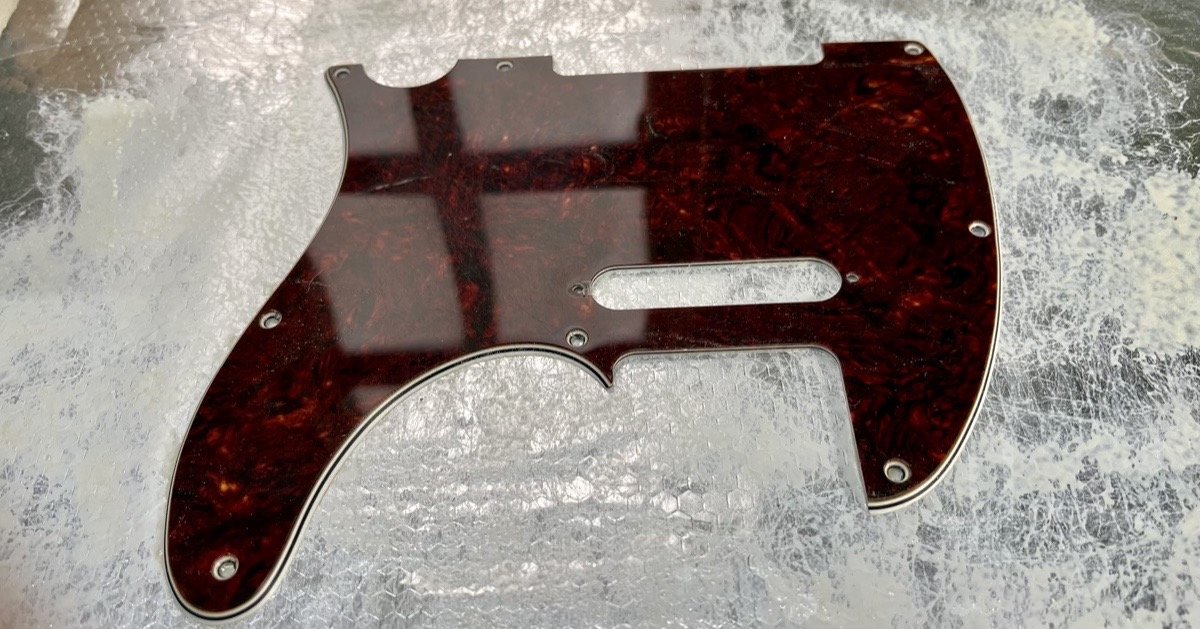
But not always. If you want to be more certain, you can shield the back of the pickguard. Easiest way to do that is to use a large sheet of kitchen foil (get the heavy one), spray it with some photo mounting adhesive, and pop your pickguard on it. Press out any creases, carefully cut back with a new Exacto knife blade and, hey presto, you’re done.
But you’re not. What you’ve done is to coat a pickguard with foil. It’s not actually a shield until that foil is grounded. Grounding means that any interference (and hopefully static) intercepted by the shield has a path to ground where it can be dissipated.
While working on this guitar, I chose to shield the cavity too. Doing this will (a) be good for keeping the guitar protected from interference and (b) provide a means to ground the pickguard shielding.
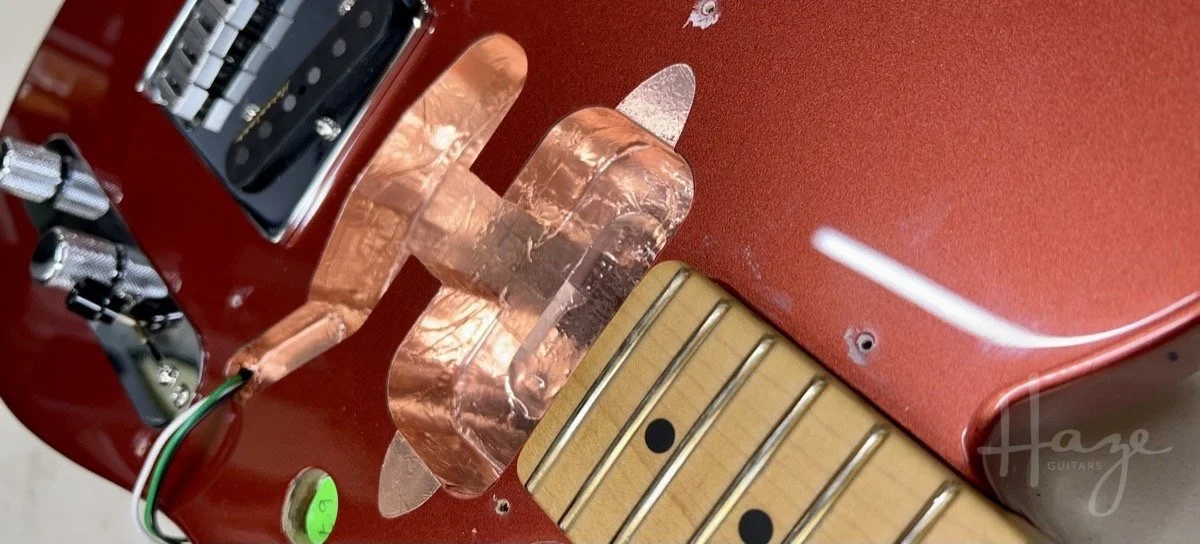
Let me explain. When I shield the cavities, I use copper tape. I run some of the cavity shielding tape over the top edge and onto the guitar face. You can see the tabs poking over the edge in the photo above. Then, when the pickup shield is pressed against the cavity shield, the two are electrically connected. I can then provide a path to ground for the cavity shield and the pickguard shield can take the same path (pickguard shield –> cavity shield –> ground).
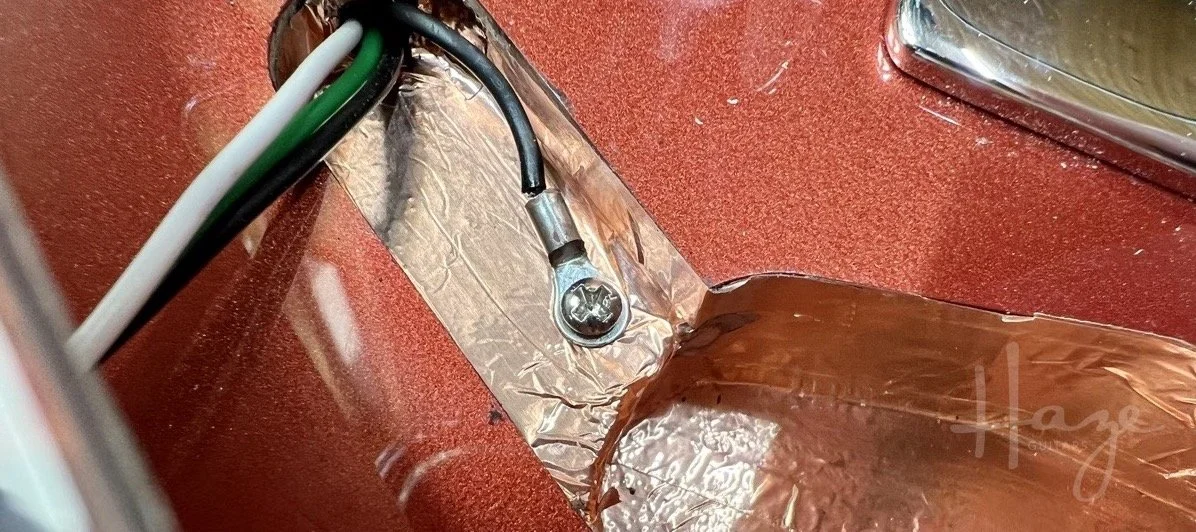
I generally run a new wire to each shielded cavity. I solder a little screw-eye to it and then use a small screw to screw it where it contacts the cavity shielding. The other end gets soldered to a common ground point back in the control cavity (usually the back of a pot case). This connects the cavity shielding back to the guitar’s ground and provides a path for any electrical nastiness it might pick up. And, like I said, when the pickguard shield contacts the cavity shield, it can take the same path.
I find that this will normally do the trick to deal with static issues related to pickguards and covers. I should add that, obviously, shielding is for more than just static electricity. Keeping your guitar internals tucked away behind a shield can prevent them picking up the various different interference frequencies that are present all over the place. If you’ve got a guitar that’s a little hummy or noisy, shielding the cavities and covers can go a long way to quietening it down.
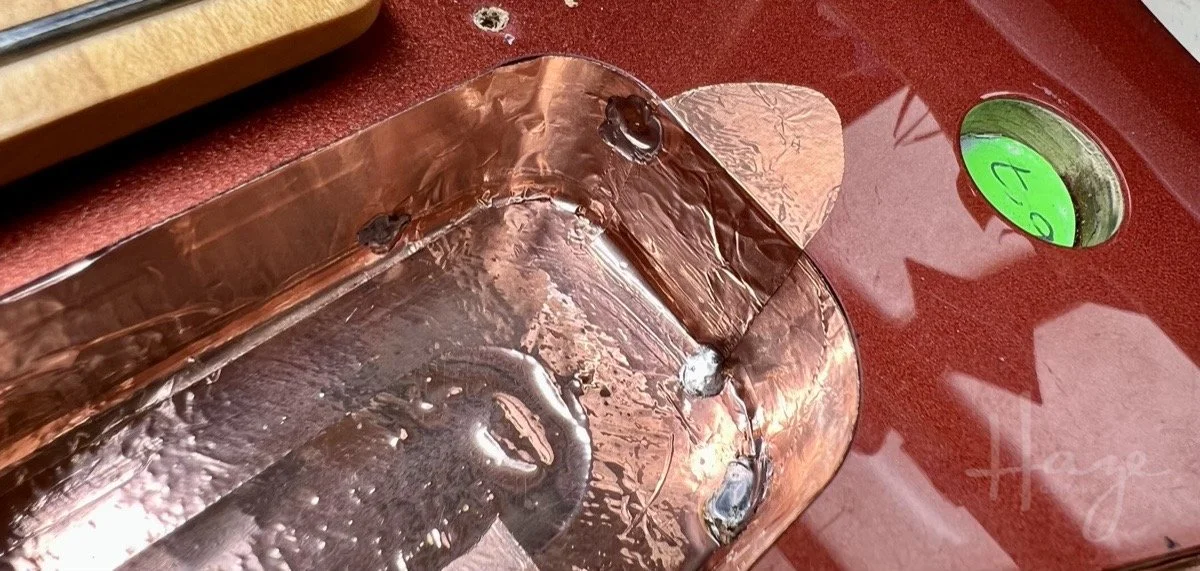
Something that I definitely should mention when discussing shielding is the importance of keeping your shield electrically sound. Each of those strips of copper tape needs to have electrical continuity to the rest. Some tapes have a conductive adhesive to help this but it's good practice to add a little solder between successive strips. Also, do overlap each new strip a little way onto the previous one.
By the way, you can shield the rear of pickguards and cavity covers with copper tape too. Just use successive strips, keeping them as close together as you can. I find it a little easier to just spray a sheet of foil but you do you.
Oh, and a final word on static. You’ll see recommendations to wipe your guitar with dryer sheets (the things you put in your clothes dryer to stop your underwear sticking together). If you choose to try this, be careful that the sheets are not too abrasive. Some of them can scratch finish or plastic so take care.
P.S. I talk some more about shielding and a lot more about lots of other guitar wiring stuff in my book, Complete Guitar Wiring. It's good. People say nice things about it and I think you'll like it. It's available in digital from my site and in print from Amazon. Find out more at Complete Guitar Wiring.
This article written by Gerry Hayes and first published at hazeguitars.com







Gibson’s addition of PCBs gets a lot of criticism. Is it justified? Mostly no but with a little bit of yes.